






A pressure washer can make light work of a dirty patio, but you do not necessarily need one to get paving slabs looking clean again. For everyday dirt, light algae and general garden grime, a bucket of warm water, a stiff brush and a little effort can often do the job.
In fact, starting with the gentlest cleaning method is usually a sensible approach. Marshalls recommends vigorous brushing with a stiff yard broom and a hot detergent solution for general dirt and algae, while Bradstone similarly advises starting with water and a stiff brush before moving on to stronger cleaning methods.
That approach can be particularly useful in British gardens, where damp conditions, fallen leaves and shaded patios can encourage green growth over time.
This guide explains how to clean paving slabs without a pressure washer, how to tackle moss and algae, what to consider with different paving materials, and when using a pressure washer may make more sense.
What You'll Need to Clean Paving Slabs by Hand
You do not need much specialist equipment for a basic patio clean. Have a stiff-bristled yard brush, a bucket, warm water, washing-up liquid, clean water for rinsing and a pair of garden gloves ready.
For stubborn stains, you may also need a cleaning product designed specifically for your type of paving.
Before applying any cleaning product across the whole patio, check the paving manufacturer's care instructions and test it on a small, inconspicuous area. Marshalls recommends carrying out a trial on a small section before using a cleaning agent over a larger paved area.
How to Clean Paving Slabs Without a Pressure Washer
For a patio with ordinary dirt, mud and light green growth, start with the following six-step method.

1. Sweep Away Leaves and Loose Dirt
Move garden furniture, plant pots and other obstacles out of the way, then give the whole patio a thorough sweep.
Remove leaves, loose soil, twigs and as much surface moss as possible. Pay particular attention to the joints between slabs and areas beneath furniture or plant pots.
Regular sweeping is useful even when you are not carrying out a full clean. Leaves and other organic debris can hold moisture against the paving, while dirt can become harder to remove if it is allowed to build up over time.
2. Prepare Warm Soapy Water
Fill a bucket with warm water and add a small amount of ordinary washing-up liquid.
There is no need to make the mixture excessively concentrated. The aim is to loosen surface grime so it can be removed mechanically with the brush.
This is also a very UK-friendly cleaning method: Marshalls specifically recommends warm water and washing-up liquid as a straightforward way to remove many common stains from patio slabs.
3. Wet the Paving
Apply the warm soapy water across a manageable section of paving.
Rather than soaking the entire patio at once, working in smaller sections can make scrubbing easier and prevent the cleaning solution from drying before you reach it.
Give particularly dirty areas a little time to become wet before you start brushing.
4. Scrub With a Stiff-Bristled Brush
Use a stiff yard brush to scrub the paving thoroughly.
Work backwards and forwards and change direction occasionally to help lift dirt from textured surfaces. Spend extra time on darker patches, joints and shaded parts of the patio where algae or moss tends to collect.
You may need to repeat the process on paving that has not been cleaned for several seasons.
5. Rinse With Clean Water
Once you have loosened the dirt, rinse the area with clean water.
A bucket is perfectly adequate, so you do not need a garden hose to complete the job. Make sure you rinse away remaining detergent rather than allowing soapy water and loosened dirt to dry back onto the slabs.
Take care with run-off if your patio sits next to flower beds, a lawn or a pond.
6. Let the Paving Dry Before Judging the Result
Allow the patio to dry completely before deciding whether it needs another clean.
Natural stone and concrete paving can look considerably darker when wet, so checking your work immediately after rinsing can be misleading.
If a few dirty areas remain once the paving is dry, concentrate on those sections rather than automatically cleaning the entire patio again.
How to Remove Moss and Green Algae From Paving Slabs
Green paving is particularly familiar in damp and shaded parts of a British garden.
The Royal Horticultural Society explains that algae thrive in wet conditions and can develop more quickly in shady areas with poor air circulation. Mosses also commonly favour damp, shady conditions and often establish themselves between paving slabs.
The growth itself does not necessarily damage the hard surface beneath it, according to the RHS. The more immediate concern on patios, steps and paths is that algae and similar growth can make the surface slippery.
For light growth, start by brushing the paving vigorously with a stiff broom. Use a narrower brush or suitable hand tool to remove moss from joints where necessary, then wash the area using the warm-water method above.
You can also make the conditions less favourable for regrowth. Clear fallen leaves regularly, keep nearby drains free from debris and, where practical, improve airflow around heavily shaded sections.
The RHS recommends non-chemical measures such as regular brushing, reducing excessive shade and improving drainage as ways of discouraging algae and moss on hard surfaces.
That does not mean a perfectly moss-free garden should always be the objective. On decorative stone and surfaces that are not walked on, some moss and lichen can form part of the garden ecosystem. The areas worth prioritising are paths, patios and steps where slippery growth could present a practical hazard.
How to Deal With Stubborn Patio Stains
Not every mark on a patio should be treated in exactly the same way.
Leaf staining and general organic grime will often improve after repeated brushing with warm water. Food and drink spills are best dealt with relatively quickly rather than being allowed to soak into porous paving. Bird mess can usually be softened with water before being brushed away.
Grease, oil, rust and deeply ingrained stains may require a specialist cleaner. In those situations, choose a product specifically identified as suitable for your paving material rather than reaching for the strongest household chemical available.
If the first gentle clean does not completely remove a stain, repeating the treatment is often preferable to immediately increasing the strength of the chemical or using aggressive abrasion.
Can You Use Vinegar or Bleach on Paving Slabs?
Household cleaning hacks involving white vinegar or bleach are easy to find online, but neither should be treated as a universal patio cleaner.
Vinegar is acidic, which matters because acid-based cleaning products can affect certain paving materials. Marshalls warns that cleaning agents containing acid can adversely affect the appearance of concrete and natural stone, while its guidance for Indian sandstone specifically advises avoiding acidic cleaning solutions.
Bradstone likewise advises against acid-based cleaners on natural stone such as sandstone and limestone.
Bleach also needs caution. Although diluted bleach is sometimes used for particular paving-cleaning applications, it can affect surrounding plants and wildlife and may not be appropriate for every surface. Marshalls advises care where bleach is used because run-off can damage nearby garden life.
The safer rule is simple: identify the paving material first, check the manufacturer's care guidance and use the mildest effective method.
Does the Cleaning Method Depend on the Type of Paving?
Yes. Paving slabs may look broadly similar once they are installed, but concrete, sandstone, limestone and porcelain do not necessarily respond to cleaning in the same way.
Concrete Paving Slabs
For ordinary dirt on concrete paving, start with water and a stiff brush. A mild detergent can be added where necessary.
Be cautious with acidic cleaning products, which may alter the appearance of concrete. Always test specialist cleaners before applying them across a large area.
Indian Sandstone
Indian sandstone deserves a gentler approach.
Warm water, washing-up liquid and a stiff brush provide a sensible starting point. Marshalls describes soapy water as a simple way to clean Indian sandstone and specifically warns against acidic cleaning solutions because they can cause discolouration or rust-like effects on the slabs.
Limestone and Other Natural Stone
Natural stone should not automatically be treated with whatever chemical happens to be available in the shed.
Acid can be particularly problematic for limestone. Paving Direct, for example, cautions that acid-based products can permanently damage the appearance and surface structure of limestone paving.
If you do not know exactly what type of stone you have, err on the side of a mild clean until you can identify it.
Porcelain Paving
Porcelain is relatively low maintenance, but it still benefits from routine sweeping and washing.
Bradstone recommends warm water and household detergent for routine cleaning of its porcelain paving. For more stubborn marks, the manufacturer advises a light pressure wash using a fan jet rather than a concentrated pencil jet.
Block Paving
Manual cleaning is also suitable for many block-paved areas.
Warm soapy water and a stiff-bristled brush give you more control around the joints than aggressive pressure washing. This is particularly useful where jointing sand is present, as unnecessarily forceful washing can disturb the material between the blocks.
Marshalls includes manual scrubbing with mild detergent or washing-up liquid among its recommended methods for block paving.
When Is Hand Cleaning Not Enough?
For a small patio that receives regular maintenance, a brush and bucket may be all you ever need.
The calculation changes when the area gets bigger.
A large patio, a long garden path or a driveway can take considerable time to scrub manually. The same applies when paving has accumulated several seasons' worth of ingrained grime or when you are cleaning several outdoor areas in one session.
There is also a point at which repeated scrubbing becomes less practical than using powered equipment.
That does not mean you should begin every patio clean with the most powerful pressure washer setting available. It simply means that pressure washing can become a useful second option when a gentler method is no longer efficient.

For Tougher Jobs: Consider a Pressure Washer
If manual cleaning is taking too much time, a pressure washer can help tackle larger paved areas and more stubborn build-up.
For households that clean patios, paths, driveways or other outdoor surfaces regularly, storage and setup can be almost as important as cleaning power.
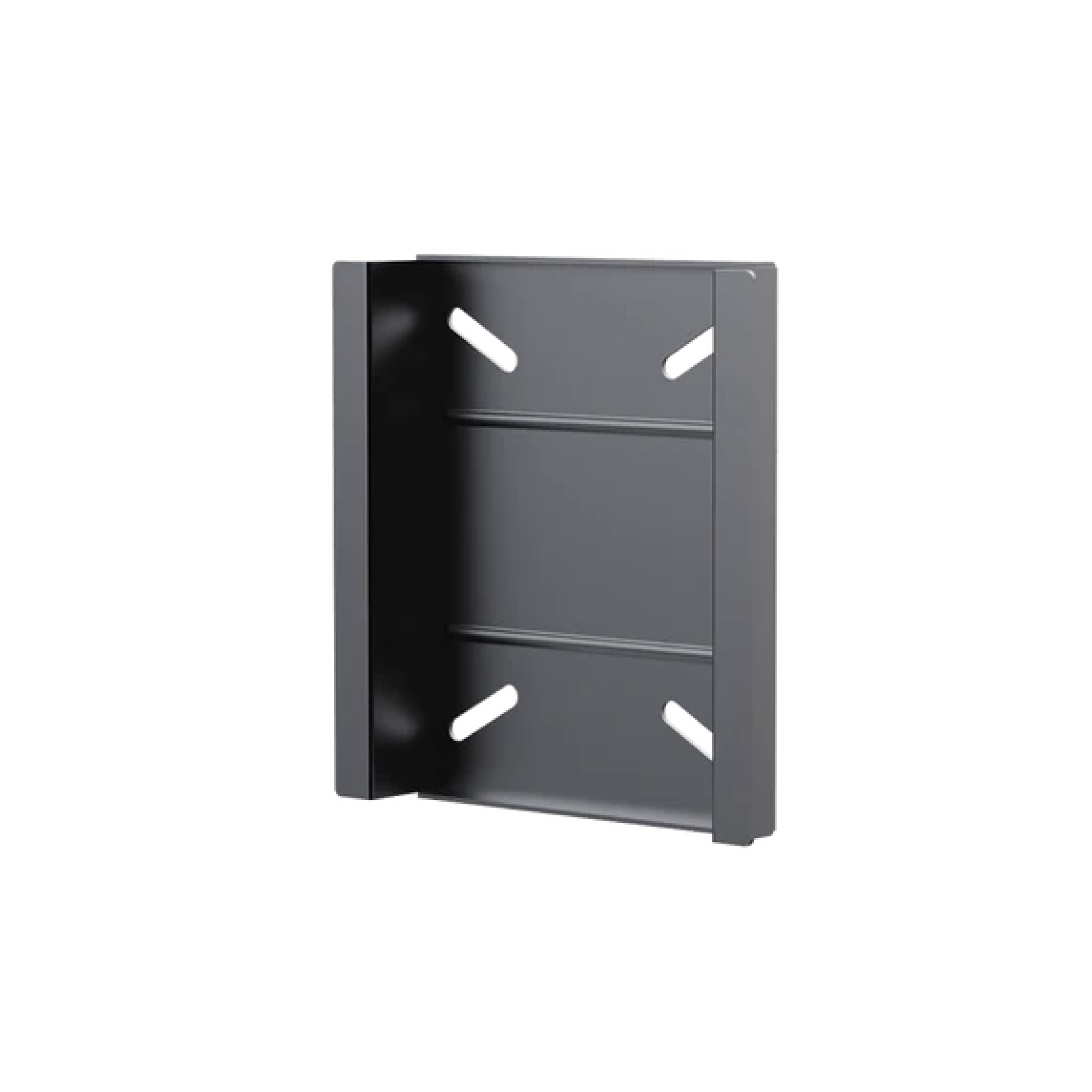
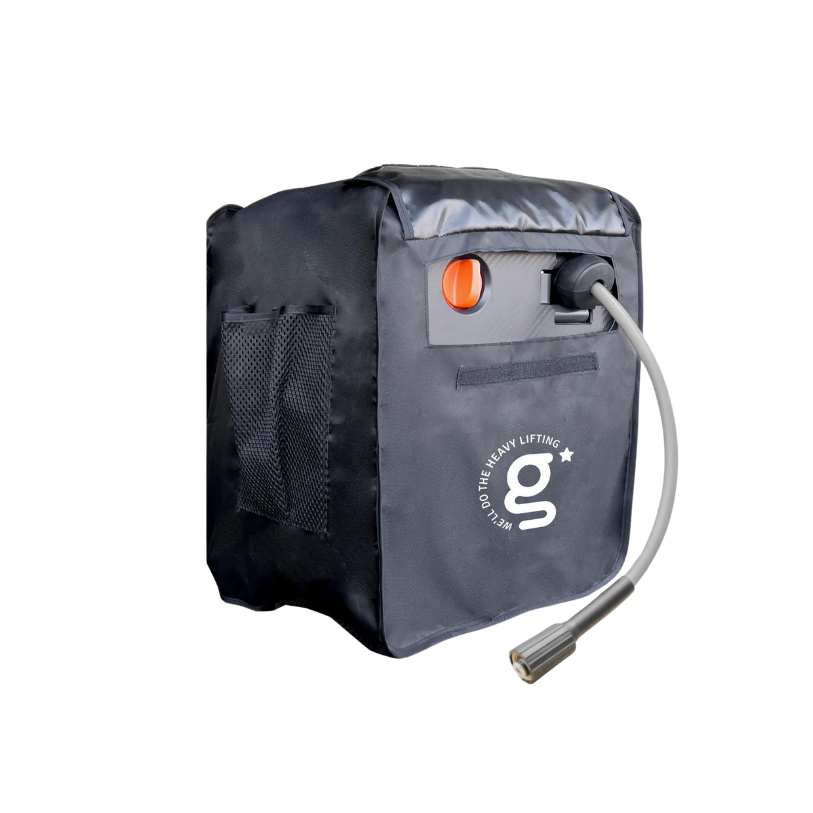
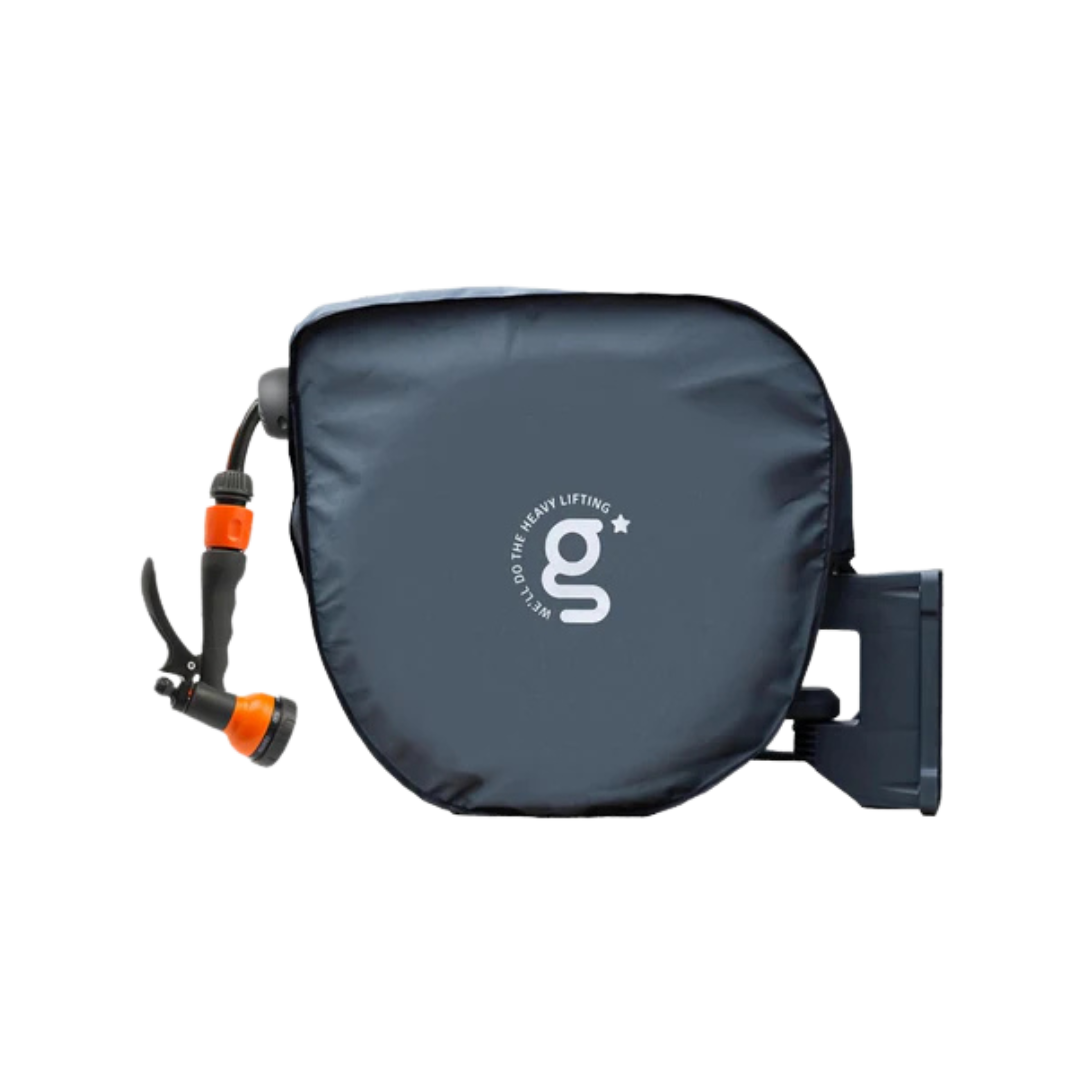
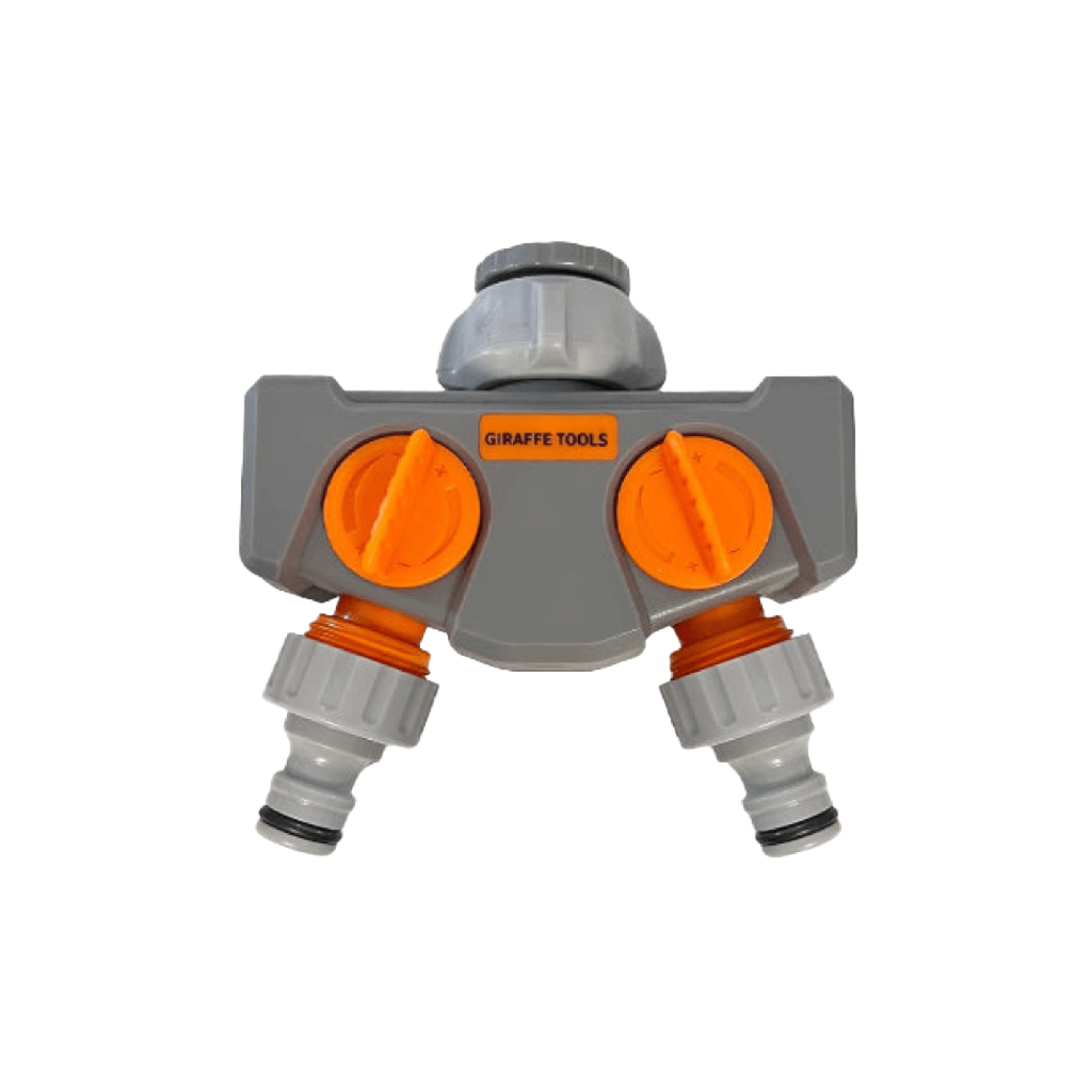
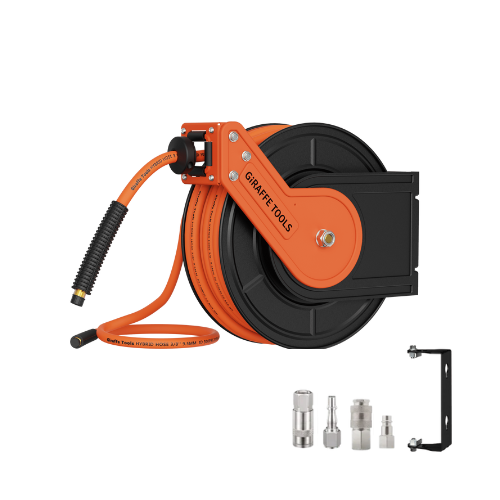
A wall-mounted system such as the Giraffe Tools Grandfalls Retractable Pressure Washer takes a different approach from a conventional portable machine. The wall mounted pressure washer remains mounted in place, while its high-pressure hose can be pulled out when needed and retracted after use. Giraffe Tools describes the Grandfalls system as combining wall-mounted storage with an automatic retractable hose, reducing the need to carry a pressure washer out and manually coil the hose after each job.
That format can be particularly convenient if your outdoor cleaning routine extends beyond one small patio. Instead of treating the pressure washer as equipment that has to be unpacked for every job, it becomes a more readily accessible cleaning tool.
For paving slabs, however, more power is not always better. The correct technique and the type of paving matter just as much as the machine itself.

How to Pressure Wash Paving Slabs Safely
Before pressure washing the entire patio, sweep away loose debris and test the washer on a small, less noticeable area.
Start conservatively. Use a wider spray pattern rather than concentrating a narrow jet on one point, maintain a sensible distance from the paving and avoid holding the spray stationary.
Pay particular attention to joints and pointing. Directing high pressure into the gaps between slabs can disturb jointing material even when the paving surface itself appears unaffected.
This cautious approach is supported by paving manufacturers. Marshalls says high-pressure washing is not normally required for general dirt and algae and recommends using no more than medium pressure if power washing is used. It also advises testing a small area first.
Natural stone deserves additional care. If you are using a Giraffe Tools pressure washer — or any other pressure washer — choose your nozzle and technique according to the paving surface rather than automatically selecting the most aggressive setting.
The objective is to remove the dirt, not the surface of the patio.
Can You Clean a Patio During a Hosepipe Ban?
This is one reason a bucket-and-brush method is particularly relevant to UK households.
What is commonly called a hosepipe ban is formally known as a Temporary Use Ban (TUB). Water companies in England can introduce these restrictions to reduce demand during periods of water shortage. GOV.UK explains that water companies have powers under Section 76 of the Water Industry Act 1991 to restrict specified uses of water temporarily.
The precise restrictions and exemptions can depend on the ban in force and your water supplier, so always check your supplier's current notice rather than relying on assumptions from a previous summer.
Patio and driveway cleaning can be covered. For example, Temporary Use Bans introduced in parts of England in 2026 included restrictions on cleaning patios and driveways with hosepipes, and the restrictions also applied to pressure washers connected to the mains water supply.
Ofwat also advises households to check their water company's guidance when restrictions apply.
If a Temporary Use Ban is in force, the simplest option may be to postpone a non-essential deep clean. For smaller jobs, a broom or brush can often deal with loose dirt without large quantities of water.
Before connecting any pressure washer to a mains water supply during a restriction, check the current rules and exemptions published by your water company.
How Often Should You Clean Paving Slabs?
There is no need to carry out an intensive patio clean every few weeks.
Regular light maintenance usually reduces the amount of deep cleaning required later.
Spring is a natural time to assess the patio after the wetter months and deal with accumulated grime or green growth. During summer, spot-clean food, drink or barbecue spills before they have time to settle.
Autumn maintenance is particularly useful in gardens surrounded by trees. Remove fallen leaves instead of allowing them to remain wet against the paving for weeks. Marshalls notes that prolonged contact with wet leaves can stain paved areas.
During winter, concentrate less on appearance and more on keeping frequently used paths and steps clear of slippery build-up.
The exact schedule will depend on how exposed, shaded and heavily used your patio is.
How to Keep Paving Slabs Cleaner for Longer
Prevention is easier than repeatedly tackling heavily ingrained dirt.
Sweep the patio regularly, especially after windy weather and leaf fall. Remove food spills promptly, keep drainage routes clear and avoid allowing damp piles of garden debris to sit on the slabs.
Pay attention to the conditions around persistent green patches, too.
If one corner repeatedly becomes covered in algae, cleaning the surface addresses the symptom but not necessarily the reason it keeps returning. Poor drainage, permanent shade and restricted airflow can all favour green growth.
The RHS notes that algae and moss are likely to return when the conditions that support their growth remain unchanged. Improving drainage, allowing more light and airflow where practical and keeping drains clear can therefore reduce the need for repeated cleaning.
Hand Cleaning or Pressure Washing: Which Method Makes Sense?
Neither method is automatically right for every patio.
For light everyday dirt, a small paved area or routine maintenance, starting with a stiff brush and water keeps the process simple and gives you plenty of control.
For delicate paving or a material you cannot identify confidently, the same gentle approach also reduces the risk of unnecessary damage while you establish the correct care instructions.
A pressure washer becomes more attractive when you are dealing with a large area, significant grime or several outdoor surfaces at once. In that situation, a system such as the Giraffe Tools Grandfalls can reduce the setup and storage inconvenience associated with conventional portable machines thanks to its wall-mounted, retractable design.
Whichever route you choose, start gently and increase the intensity only when the condition of the paving actually requires it.


