






A clean-looking home exterior does not always need the strongest pressure washer setting.
Around a UK home, the same weekend clean-up might include a green patio, a muddy driveway, tired-looking brickwork and stained render. Each surface needs a different approach. A concrete drive can usually take more water pressure than an older brick wall. Render may need a fan spray or soft wash rather than a direct jet. Pebbledash may be best left away from pressure washing altogether.
This guide shows you how to clean the outside of your home safely: where a pressure washer helps, where it can cause damage, and how to work through patios, driveways, brick and render without turning a simple clean into a repair job.
1. Start With a Five-Minute Surface Check
Before using any cleaner or machine, walk around the area and check three things: material, condition and drainage.
| Check | What to Look For | What It Means |
|---|---|---|
| Material | Concrete, patio slab, block paving, brick, render, pebbledash | Different surfaces need different pressure |
| Condition | Cracks, loose joints, flaking paint, powdery brick, hollow render | Damaged surfaces should not be pressure washed |
| Drainage | Where dirty water will run | Avoid forcing water towards doors, vents and walls |
Use your hand, not just your eyes. If mortar feels sandy, render sounds hollow when tapped, or paint flakes when touched, do not start with pressure washing.
2. Clean Patio Slabs and Garden Paths First
Patios, paths and steps are often the best place to use a pressure washer around a UK home. RHS notes that algae, moss and similar growths are common on hard surfaces such as patios, drives, paths, decking and steps, and they can make surfaces slippery.
How to clean them:
- Sweep away leaves, soil and loose grit.
- Move pots, furniture and mats out of the way.
- Wet the surface lightly first.
- Use a fan spray, not a pencil jet.
- Start on the lowest useful pressure.
- Hold the nozzle around 30-45 cm from the surface.
- Work in overlapping passes, like mowing a lawn.
- Keep the spray moving.
- Rinse dirty water away from the house.
- Let it dry, then check whether joints need refilling.
For natural stone or older paving, test a small corner first. If the surface starts shedding sand, flaking or changing texture, stop.
Use a pressure washer when: the slabs are stable, the surface is slippery, or the area is too large to scrub by hand.
Do not use one when: joints are loose, slabs are cracked, or the surface is delicate natural stone.
3. Clean Driveways Without Blasting Out the Joints
Driveways usually handle pressure washing better than walls, especially concrete. Block paving needs more care because the jointing sand helps keep the surface stable.
For concrete driveways:
- Sweep first.
- Pre-rinse the surface.
- Apply driveway cleaner if needed.
- Let the cleaner dwell according to the label.
- Rinse with a fan spray.
- Work from the house outward.
- Finish by rinsing edges and drainage areas.
For block paving:
- Do not aim directly into the joints.
- Use a wider spray pattern.
- Clean diagonally across the blocks rather than straight down the gaps.
- Keep the nozzle moving.
- After drying, inspect the joints.
- Re-sand if jointing sand has washed out.
Use a pressure washer when: you are cleaning tyre marks, mud, algae at the edges, or general grime.
Do not use one when: the blocks are loose, joints are already empty, or water cannot drain away safely.
4. Clean Brickwork Gently, Not Aggressively
Brickwork is where many homeowners get into trouble. Some brick walls can be pressure washed carefully, but older or softer brick can be damaged quickly.
STIHL UK advises checking the facade before pressure washing and being careful with softer bricks, loose bricks and damaged joints.
Before cleaning brick, check:
- Is the brick face powdery?
- Are any bricks cracked or loose?
- Is mortar missing, sandy or crumbling?
- Has the wall been repaired before?
- Is the brickwork old or weathered?
If the brickwork is sound:
- Brush off loose dirt first.
- Wet the wall gently from bottom to top.
- Use a low-pressure fan spray.
- Keep the nozzle at least 45-60 cm away.
- Spray at a slight downward angle.
- Do not force water into joints.
- Clean in small sections.
- Rinse lightly.
- Let it dry before judging stains.
If the brickwork is old or weak:
Use a soft brush, masonry-safe cleaner and a low-pressure rinse. Do not use a concentrated jet. Do not chase every stain if removing it means damaging the surface.
Use a pressure washer when: the brick is modern, hard, stable and tested first.
Do not use one when: brick is soft, mortar is loose, or the wall is old and weathered.
5. Treat Render as a Delicate Surface
Render needs more care than patios or driveways. Weber UK recommends using a fan action rather than a jet action when cleaning render, because a concentrated jet can damage the surface. It also notes that dry dash finishes are not suitable for pressure washing.
For stable cement or lime render:
- Brush away loose dirt and cobwebs.
- Wet the surface gently.
- Use a render-safe cleaning solution if needed.
- Let it sit according to the product instructions.
- Use a low-pressure fan spray only.
- Keep the nozzle well back from the wall.
- Work from top to bottom for final rinsing.
- Avoid edges, cracks, vents and window seals.
- Stop if the surface starts marking or lifting.
For painted, acrylic, silicone or insulated render:
Use soft washing, low-pressure rinsing or hand cleaning. These finishes are more about surface care than force.
For pebbledash or dry dash:
Do not pressure wash. The finish can shed or break away under pressure.
Use a pressure washer when: render is stable, uncracked and suitable for low-pressure washing.
Do not use one when: render is cracked, painted, insulated, pebbledash, dry dash, or already failing.
6. Use the Right Cleaning Method for Each Area
| Area | Best Method | Why |
|---|---|---|
| Slippery patio | Pressure washer with fan spray | Removes surface algae and moss efficiently |
| Concrete driveway | Pressure washer | Handles mud and tyre marks well |
| Block paving | Controlled pressure + possible re-sanding | Cleans well but joints need care |
| Modern brick | Low-pressure test clean | Can work if brick and mortar are sound |
| Old brick | Soft brush + low-pressure rinse | Reduces risk of surface damage |
| Cement render | Soft wash or low-pressure fan rinse | Avoids marking the surface |
| Painted render | Soft wash | Protects coating |
| Pebbledash | Manual/professional cleaning | High pressure can damage the finish |
| Windows and seals | Hand clean | Avoids leaks |
| Vents and electrics | Avoid pressure washing | Prevents water ingress and safety risk |
7. Where a Wall-Mounted Pressure Washer Fits
A pressure washer is most valuable when the job repeats: patio after winter, driveway after wet weeks, garage entrance after muddy tyres, car area after a wash.
That is where Grandfalls Plus fits naturally.
It is not for blasting fragile render or old brickwork. It is for the regular hard-surface jobs around a UK home where pressure washing is actually the right method.
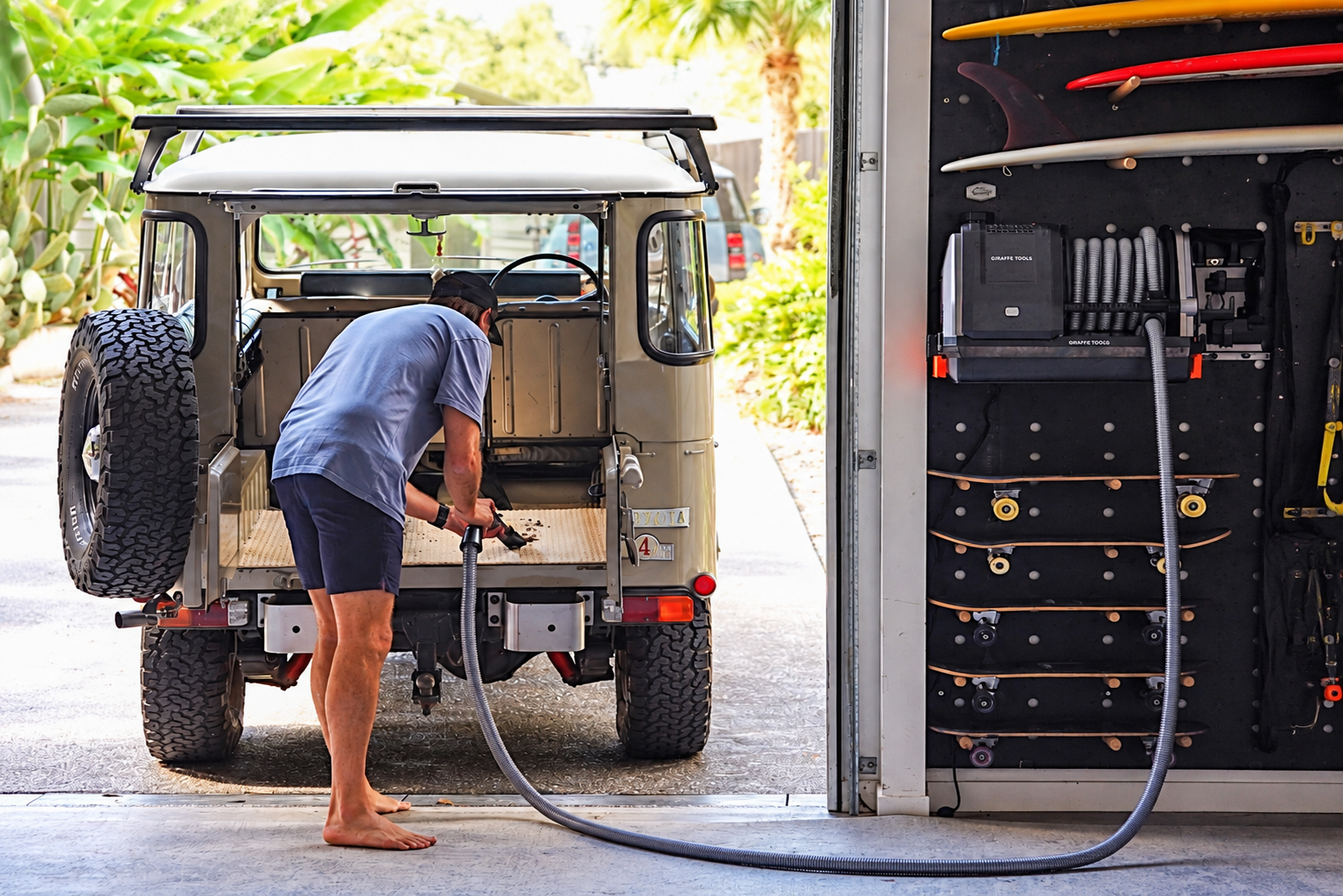
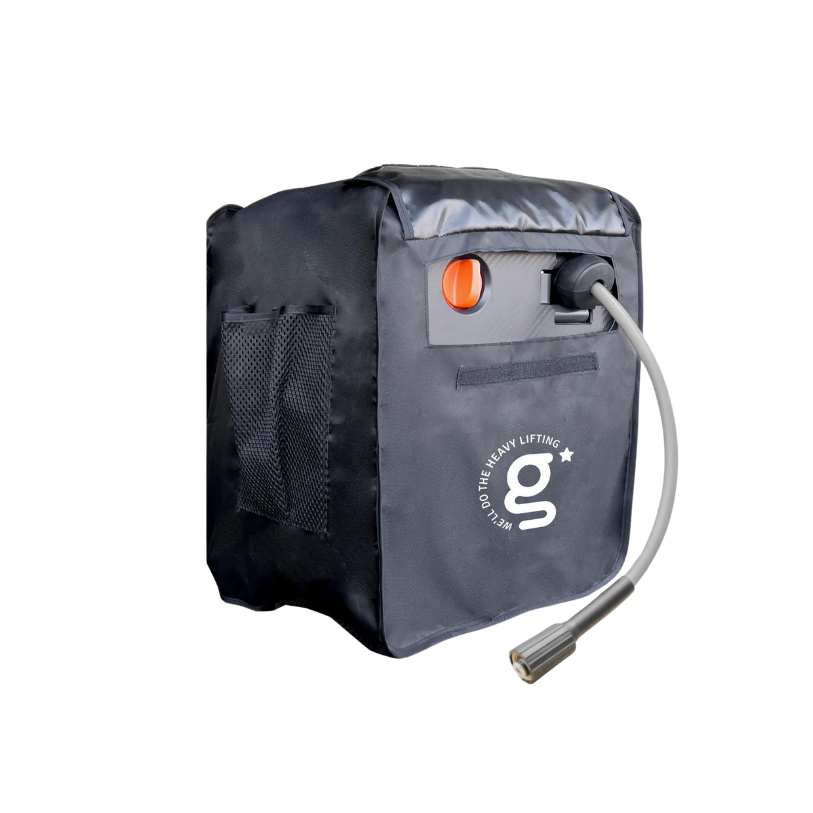
The wall-mounted setup helps because you do not have to carry the machine out, untangle hoses, connect everything, clean, drain, coil and store it again. For driveway, patio, garden path, garage entrance and car-wash areas, that convenience matters. The easier the tool is to start and put away, the more likely you are to maintain surfaces before they become a bigger job.
FAQ
Can you pressure wash brick in the UK?
Yes, but only if the brickwork is sound. Use low pressure, a fan spray and a small test area first. Avoid pressure washing soft brick, old brick or loose mortar.
Can you pressure wash render?
Sometimes. Stable cement or lime render may tolerate low-pressure fan rinsing. Painted, acrylic, insulated, cracked, pebbledash or dry dash render should not be pressure washed aggressively.
What should I clean first outside my house?
Start with the safest hard surfaces: paths, steps, patios and driveways. Leave brick and render until after you have checked their condition.
Do I always need a pressure washer?
No. Small areas, delicate walls, painted surfaces and damaged materials are often better cleaned with a brush, mild cleaner and low-pressure water.
What is the biggest mistake when power washing a home exterior?
Using too much pressure too close to the surface. Most damage happens when people use a narrow jet, stand too close, or keep spraying one spot for too long.